
British Vintage Stereoscopy — Viewer
Realisticscope
A catalogue entry from the collection
| Name | Realisticscope |
| Manufacturer | Realistic Travels, London |
| Date Period | Company c. 1918-1939, Viewer c. 1923-39 |
| Materials | Aluminium and steel, wooden block in core |
| Format | Holmes Format Stereocards - 18cm x 9cm |
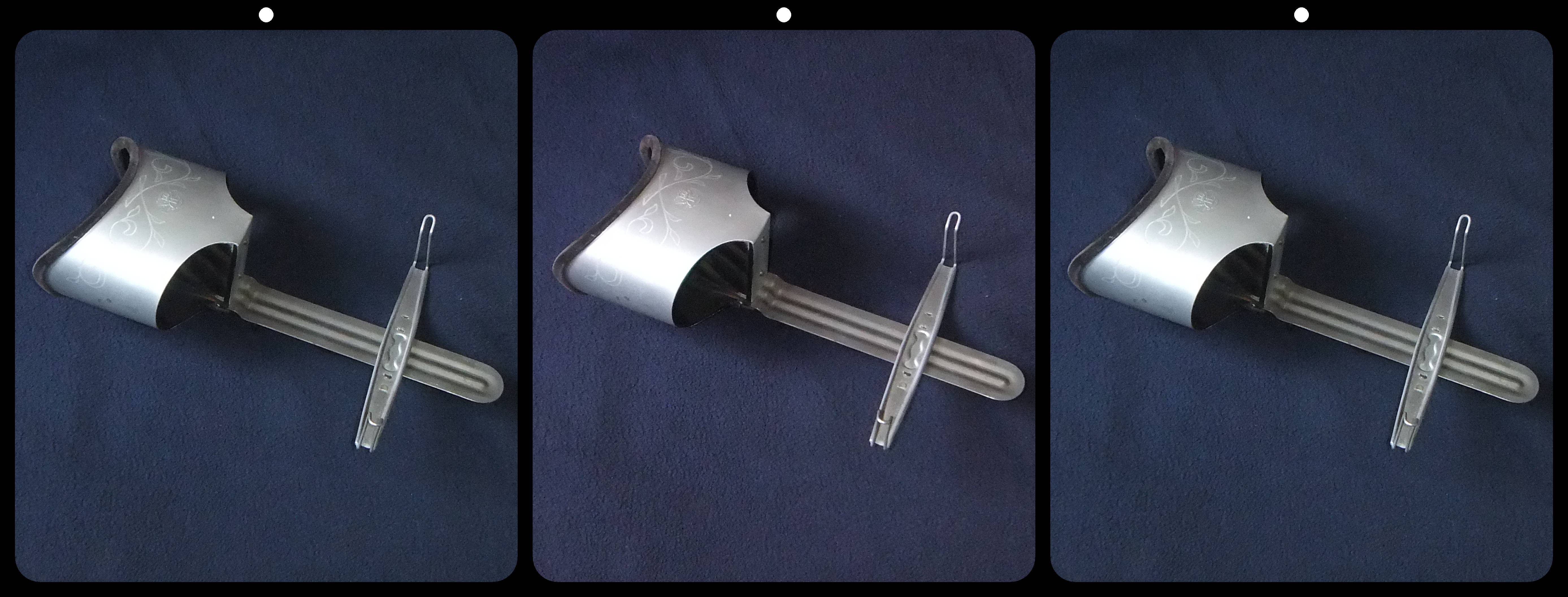
Realisticscope viewer.
This is one British viewer I had never heard of - and maybe you haven't either. I am indebted to Paul Bond, who contacted me soon after I launched the site, offering to write me an article about Realistic Travels and their Realisticscope, and send me some scanned images. I have edited a bit to fit the site but a big thanks to Paul for the content of this article and all photos. He has written an excellent book on the photos produced by Realistic Travels depicting World War 1, with many excellent stereo reproductions. I bought a copy and can recommend it - you will find a link to that below the article; please do check that out. And now, over to Paul...
The Realisticscope viewer was made by Realistic Travels. The company was the accidental brain child of Dr HD Girdwood OBE, a former photographer and area manager for American stereoscopy company Underwood and Underwood. His original aim was to make travel films from across the globe, but plans changed with the outbreak of World War 1. Girdwood then determined to take the very first live action film from a major conflict and along with his assistant HC Beckett they headed into France in 1915, where, over 6 weeks, they took 18,000 ft of film (around 5 hours), and around 2000 stereo photographs using a 1905 "Triple Lens Stereographic" camera made by Folmer and Schwing (New York) - very high quality and possibly the best portable stereo camera made at the time.
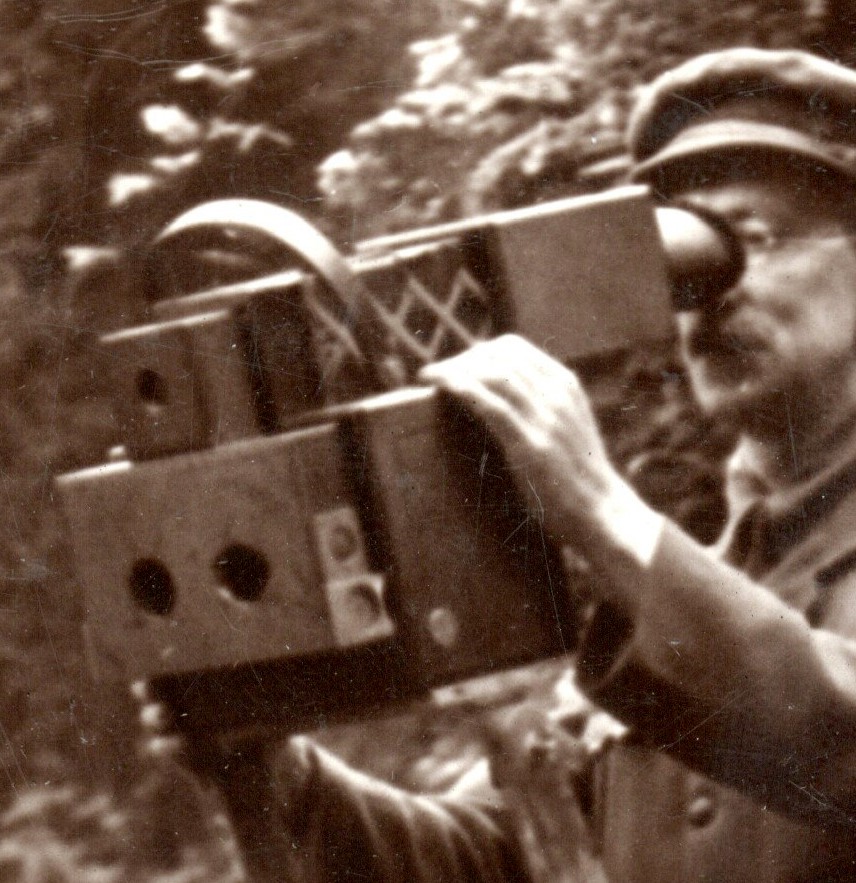
Folmer and Schwing Triple Lens Stereographic camera being operated by HC Beckett.
Their film was politically suppressed and made very little money so they turned back to the 3D images and in 1918 started by publishing a set of 100 views - Realistic Travels was born. These sold well and in 1919 they produced a larger 200 card set by adding in both post war and "battlefield reconstructions"; this was their most successful product, many thousands of these sets were sold and so are still easily found for sale today. From 1921 even larger war sets were produced with 300, 400, 500 or even 600 cards; alongside these they started to release scenic world views like India, South Africa, Italy and Switzerland. The sets were generally sold in royal blue "book form" boxes holding 100 cards; most of which have now faded to a grey on the outside. There are also rare red boxes and smaller blue 50, 33 and 25 card boxes for special sets or just customer selections. From 1924 they also produced rare and interesting British industrial views in conjunction with the London Illustrated News. Sales declined in the depression of the 1930’s and production finally stopped in 1939.
Although the stereo views produced by Realistic Travels views are well known, the Realisticscope is not, and is not easy to find. By the time the company were a household name, most customers would already have a viewer from companies like Underwood and Underwood, so had no desire to buy another.
The viewer was almost unique at the time in having an all-metal construction (there are also some made by H. C. White). The hood is an aluminium shell but of a unique elongated design, embossed with the company logo consisting of the letters "R" and "T" entwined (although most people read it as TR rather than the intended RT - I did too!). Below the letters is the "field gun" logo referring back to their most successful products – views of the Great War (World War 1) - but this is difficult to see.
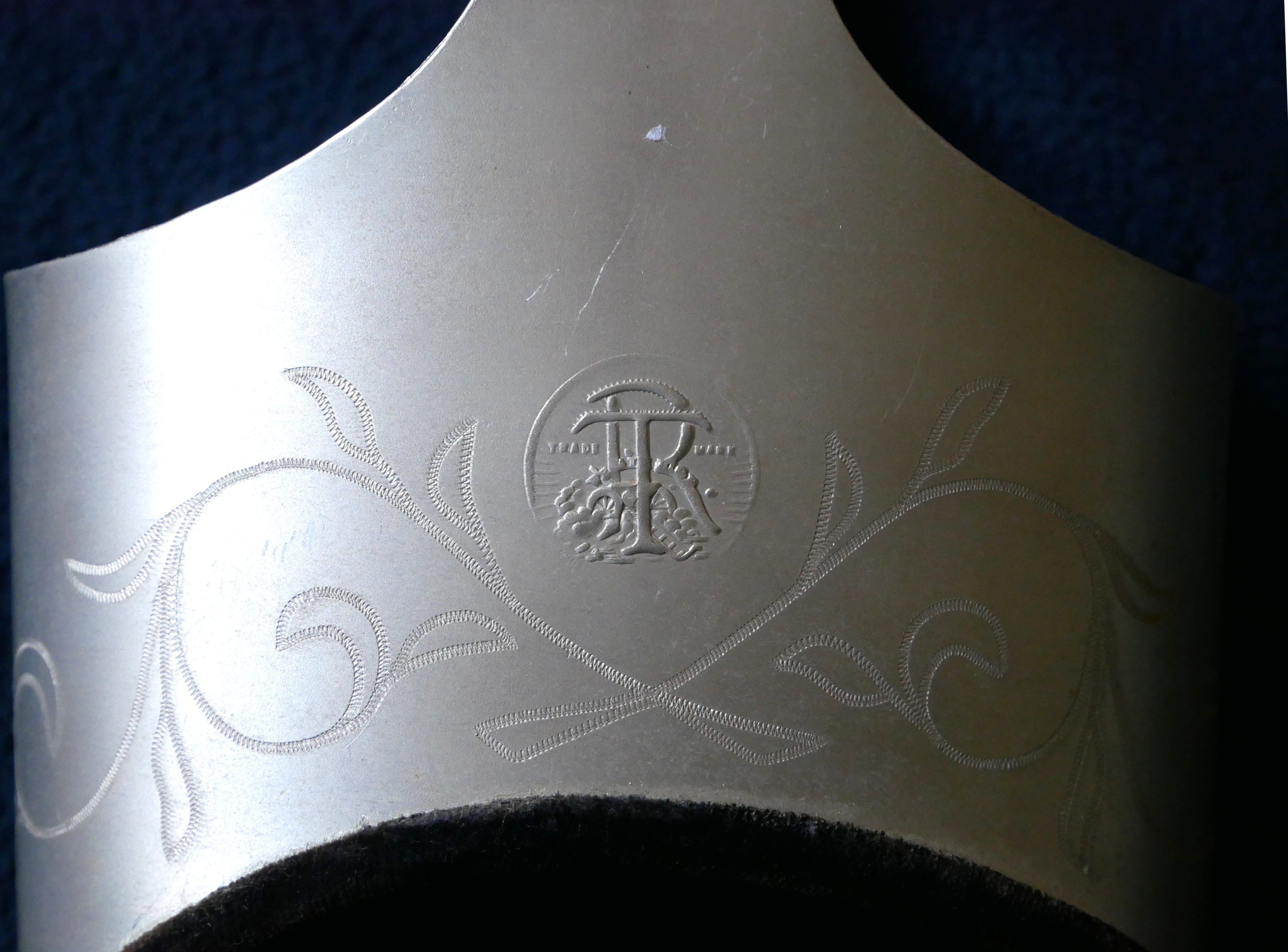
Realistic Travels logo.
The shaft is made of steel, with the lettering "Made by Realistic Travels London" and "Realisticscope" on the underside. These often now shows signs of rust but rubbing a little oil on the shaft will reveal the lettering. The handle should have a rounded profile but it seems that these were liable to split; around half of the surviving viewers now have replacement pointed (Underwood style) handles.
Realistic Travels is a both rewarding and frustrating subject for collectors with no catalogues, no negative numbers and frequent substitutions – for example the very largest WW1 set is of 600 images but so far at least 1333 different published WW1 negatives have been identified; this does mean however, that the chance of finding a rare and interesting view is much higher than for a collector of other companies like Keystone.
Finally, it's worth noting that these ‘second era’ (generally post 1900) stereoviews were deliberately curved in a press during manufacture, this was to help with handling during production and distribution – if you have any, please do not try to flatten them.
Further Reading & Web Links
Samples From Image Sets To View (More to be added over time)
If you enjoyed this article - why not subscribe to the accompanying SUBSTACK NEWSLETTER? This will summarise all new additions to this site in an occasional email - with a link to the full articles here, as well as include anything else stereo related that doesn't quite fit on the site. Alternatively, just bookmark or add this site to your favourites and remember to stop by regularly and see what's new!
I am happy to answer any questions you may have about Realistic Travels or views published pre-war by Dr. Girdwood under his 'H.D. Girdwood - Publisher' brand - Paul Bond
ReplyDelete